Why study Emotions & Metaphysical Kinesiology · Heart of Mervin
Discover Emotions & Metaphysical Kinesiology: Emotions & Metaphysical Kinesiology™
Whether you are preparing for a career as a specialist kinesiologist, bringing Emotions & Metaphysical Kinesiology into another therapeutic practice, or learning for yourself and your family at home, you are welcome to learn with me.
Emotions & Metaphysical Kinesiology™ (EMK) brings together muscle reflex testing, emotional awareness and a wide range of remedies and energetic techniques. Created by Denise Robinson of By The Bay Kinesiology®, it offers a way of exploring the person as a whole: their physical experience, feelings, thoughts, life story and spiritual understanding. In an Emotions & Metaphysical Kinesiology balance, muscle testing helps guide the process as we explore stresses, familiar reactions, beliefs and patterns that the person wishes to understand more deeply.
The teaching draws on Traditional Chinese Medicine and Eastern philosophies, including the Five Elements and meridians, alongside the chakra and aura frameworks. Its receptive, yin approach invites us to slow down and listen. Crystals, flower essences, essential oils, colour and sound give the learning a rich sensory dimension. You learn structured techniques while developing the care and attention to use them with each individual.
For me, the heart of this work is the relationship we create. A word, a feeling or an association may invite a deeper conversation, and there is room for that conversation to unfold gently. Two people can bring a similar concern and have very different experiences of it. I want us to stay curious, listen closely and respect the meaning each person finds for themselves. At Heart of Mervin, this is also how I approach learning: with warmth, practical guidance and space for you to discover your own understanding.

Twelve qualities to discover
What gives Emotions & Metaphysical Kinesiology its distinctive approach?
These twelve qualities give you a sense of what we explore along the pathway and how the learning comes into practice.

A real human connection
A session begins with someone being heard. We practise attentive listening, thoughtful questions and noticing body language, so there is room for the person to share what matters to them and feel comfortable in the conversation.

Making room for emotions
Feelings are welcome in the learning. We explore the words people use for their experiences, the situations that stir a response and the emotional themes they recognise. Muscle testing forms part of the Emotions & Metaphysical Kinesiology process for choosing where to focus.

Time to explore more deeply
Sometimes understanding takes a little time. A balance offers space to return to a question, notice a recurring response and consider different aspects of an experience. I value that patient exploration and the insights a person discovers along the way.

Meaning beyond the everyday
Emotions & Metaphysical Kinesiology explores the symbolism and spiritual meaning people may find in their experiences. A colour, image or personal association can become a starting point for reflection. We stay curious about what it means to the person, with respect for their own beliefs and understanding.

Care at the centre
Compassion shapes the way we learn and work together. I want you to feel able to pause, ask for clarification or share only what feels comfortable. The receptive, yin quality of Emotions & Metaphysical Kinesiology gives us space to work with gentleness and respect.

Learning with nature’s tools
Crystals, flower essences, essential oils, colour and sound make the courses rich in sensory experience. You become familiar with their place in Emotions & Metaphysical Kinesiology, alongside natural materials and sacred tools, and practise choosing and using them within a balance.
Listening to your intuition
Alongside the techniques, we make time to notice what we sense and observe. A scent, image or feeling may prompt a useful question. You do not need to feel naturally intuitive before you begin; there is room to explore and find your own understanding.

Several ways to understand energy
The Five Elements, meridians, chakras and aura each bring a different perspective to Emotions & Metaphysical Kinesiology. You study their traditional and symbolic associations, including themes relating to the brain, nervous system, immunity, organs and eyes, and learn the corresponding balancing methods.

Structure with room for the individual
Emotions & Metaphysical Kinesiology provides named protocols for themes such as stress, sleep, self-worth, money and habitual responses. These give students a clear sequence to practise, while attentive conversation helps keep the session relevant to the person taking part.

Experience as your teacher
You watch a demonstration, try the technique and receive guidance as you practise. Working with fellow students gives you time to become familiar with the sequence, handle the remedies and bring separate skills together into a complete balance.

Different needs, thoughtful approaches
The pathway also introduces working with children and animals. You learn about adapting the session, surrogate testing and appropriate care, with attention to consent, the involvement of a parent or animal carer, and the individual’s comfort.

Taking your learning into practice
If you choose the practitioner route, the full pathway also prepares you for the everyday work of running a practice. Client communication, professional boundaries, business organisation and marketing help you share your work clearly and responsibly.
Our philosophy
Meet the whole person.
Listen with an open heart.
We arrive with more than the concern we first put into words. Our relationships, memories, hopes and daily experiences all form part of our lives. In Emotions & Metaphysical Kinesiology, we make space to consider these connections and the personal meaning they may hold.
I am drawn to a way of working that allows time for reflection. We can listen to a story, notice how someone describes a feeling and gently explore what matters to them. The emotional and spiritual perspectives within Emotions & Metaphysical Kinesiology invite this wider conversation, with respect for each person’s beliefs and experience.
That same care belongs in the classroom. You are welcome to ask questions, need another explanation or take time with something new. As we learn the techniques, we also practise presence, kindness and listening. For me, these are qualities we continue to develop throughout our working lives.
Nature, remedies and the senses
Emotions & Metaphysical Kinesiology introduces a broad collection of materials and tools. These include flower essences, essential oils, crystals, colour and sound, as well as acupressure techniques and reference charts. You learn their place within the modality and practise bringing them into a structured balance.
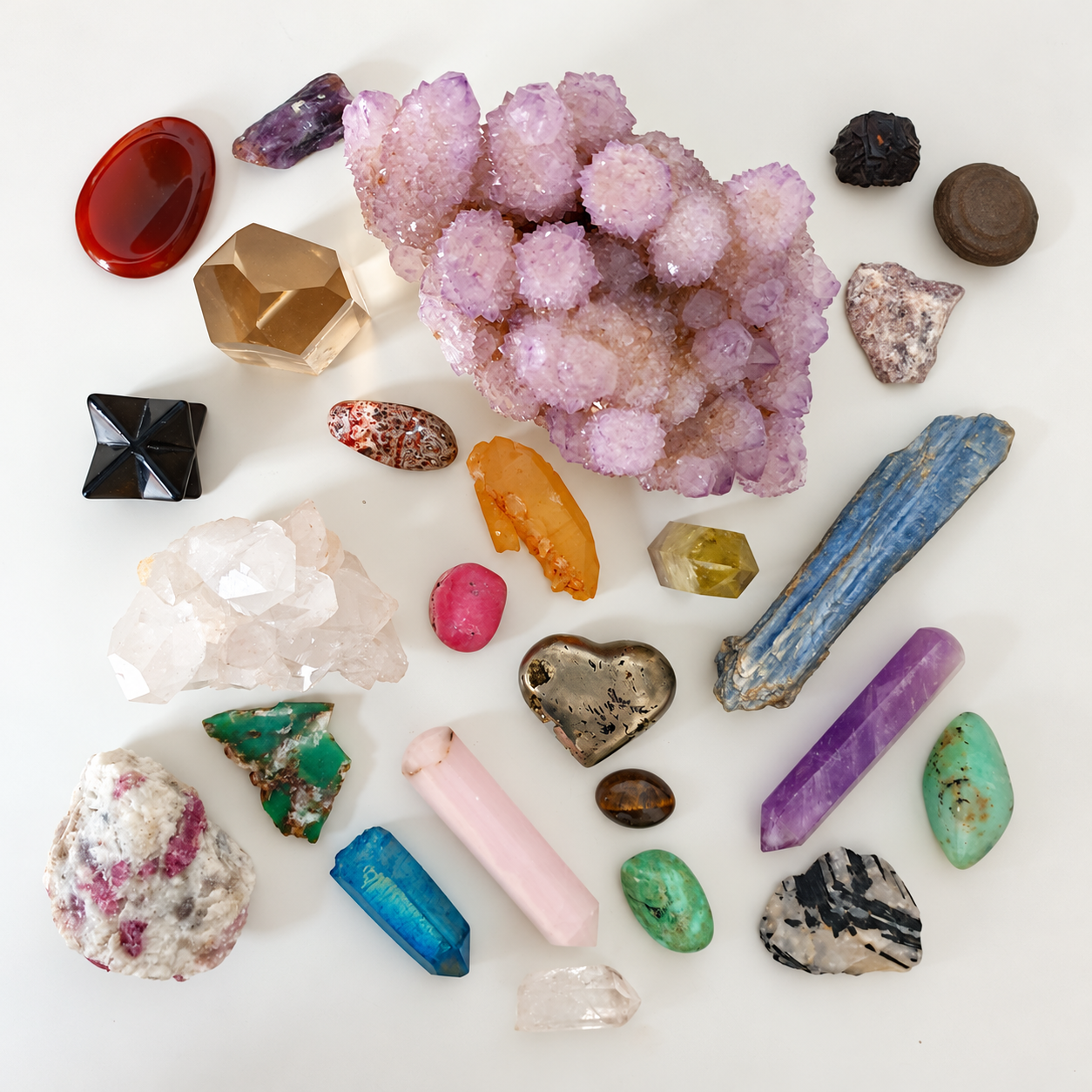
Crystals & colour
Explore the qualities and symbolism used in Emotions & Metaphysical Kinesiology, with time to observe and become familiar with the materials.

Flower essences
Meet the essences and the emotional themes associated with them in the course material.

Scent & sensory awareness
Learn how oils and other sensory tools are incorporated into Emotions & Metaphysical Kinesiology practice.
Your practical learning
Skills you will build along the pathway
These skills and topics span the complete Emotions & Metaphysical Kinesiology pathway, including the six core courses and the separate final practitioner programme. You meet them gradually through demonstration, practice and assessment. My core courses are taught in person on Orust.
Connection & the foundations
- Practise listening, tuning in and noticing body language to help a client feel comfortable sharing.
- Explore a person’s physical concerns alongside their own emotional and metaphysical associations, with curiosity and care.
- Develop communication skills for discussing concerns and creating meaningful session intentions and goals.
- Learn the Emotions & Metaphysical Kinesiology sequence for muscle reflex testing with another person.
- Practise hand and body self-testing methods, and explore the use of a pendulum within Emotions & Metaphysical Kinesiology.
- Learn the foundational protocols named Brain, Hydration, Central Meridian, Nervous System and Thymus Energy.
- Explore willingness to participate, receive support and consider change, while respecting the person’s choices.
- Study the Connection Points framework: Spirit, Mind, Heart–Body, Earth and Oneness.
Emotions, awareness & personal patterns
- Use the Emotions & Metaphysical Kinesiology process to explore emotions described in the modality as hidden, stored, trapped or subconscious.
- Study Emotions & Metaphysical Kinesiology’s spiritual concepts of negative energy fields, attachments and entity clearing.
- Learn how the modality describes and works with surrogacy, suppression and hidden energy.
- Practise surrogate testing for in-person and distance sessions involving adults, children or animals.
- Explore the Consciousness protocol and its associated emotional themes within the Emotions & Metaphysical Kinesiology framework.
- Bring sight, hearing, touch and feeling, smell, taste and intuition into sensory exploration.
- Practise Emotional Stress Release, including frontal and occipital holding techniques.
- Learn temporal tapping with personally meaningful affirmations.
- Explore how Emotions & Metaphysical Kinesiology chooses a session focus across mental, emotional, physical and spiritual themes.
- Study the protocols covering self-esteem, sabotage, money, eye modes, love, oxygen, fixations, reactivity, cross-patterning, anxiety, lack mentality, depression, sleep, stress, headache, self-love and energy.
- Learn about Emotions & Metaphysical Kinesiology’s food sensitivity, supplement, mineral and tissue-salt testing protocol and its scope. Muscle testing does not diagnose food allergy or intolerance.
- Explore age recession, including the course concepts of age of cause, age of best understanding, conception and generational patterns. These are reflective exercises, not verification of past events.
- Use the age-of-stress framework to consider associations with self, male or female figures, parents, other people, circumstances and spirit.
The energy frameworks & their tools
- Practise selecting an energy system and a focus for a balance using the Emotions & Metaphysical Kinesiology framework.
- Work with the Hara and Five Element testing vials for Fire, Earth, Metal, Water and Wood.
- Explore Five Element constitutional profiles and how their qualities are recognised within the modality.
- Study the 14 meridians and practise meridian tracing, acupressure, moxa and the related course techniques.
- Learn the Eight Extraordinary Meridians protocol, including acupressure, figure-eight techniques and essential oils.
- Study the seven major chakras and their minor chakras, with the corresponding remedies and balancing methods.
- Explore the six transpersonal chakras, their spiritual themes, and the sacred and shamanic tools used in the course.
- Work with aura colours, shapes, symbols and seven layers, including practices for the surrounding space.
- Become familiar with the range of remedies, sacred tools and techniques used across the energy systems.
- Create intentional crystal grids, both on the client and arranged in the space around them.
Bringing it together professionally
- Use the Emotions & Metaphysical Kinesiology Clinic Database to plan and bring together a complete in-person or online session.
- Explore how sessions are adapted for online work, including preparation, communication and client engagement, within the wider practitioner training.
- Learn the course approaches to working with young children and animals, adapting to their needs.
- Choose appropriate home reinforcement activities to support practice and reflection between sessions.
- Learn grounding techniques and the Walk & Breathe integration process.
- Learn to facilitate the eight Emotions & Metaphysical Kinesiology wellbeing workshops: Abundance; Balance & Flow; Crystal Clear Head; Heart Connection; Mind–Body Energy; Mind Chill; Switch Off & Sleep; Uplift Your Soul.
- Prepare for business setup, marketing, advertising, social media, an online presence and day-to-day practice management.
These are descriptions of the Emotions & Metaphysical Kinesiology curriculum. Energetic and metaphysical concepts belong to the modality’s framework; Emotions & Metaphysical Kinesiology does not replace medical or mental health assessment and care.
Heart of Mervin · Orust, Sweden
Learn with me on Orust
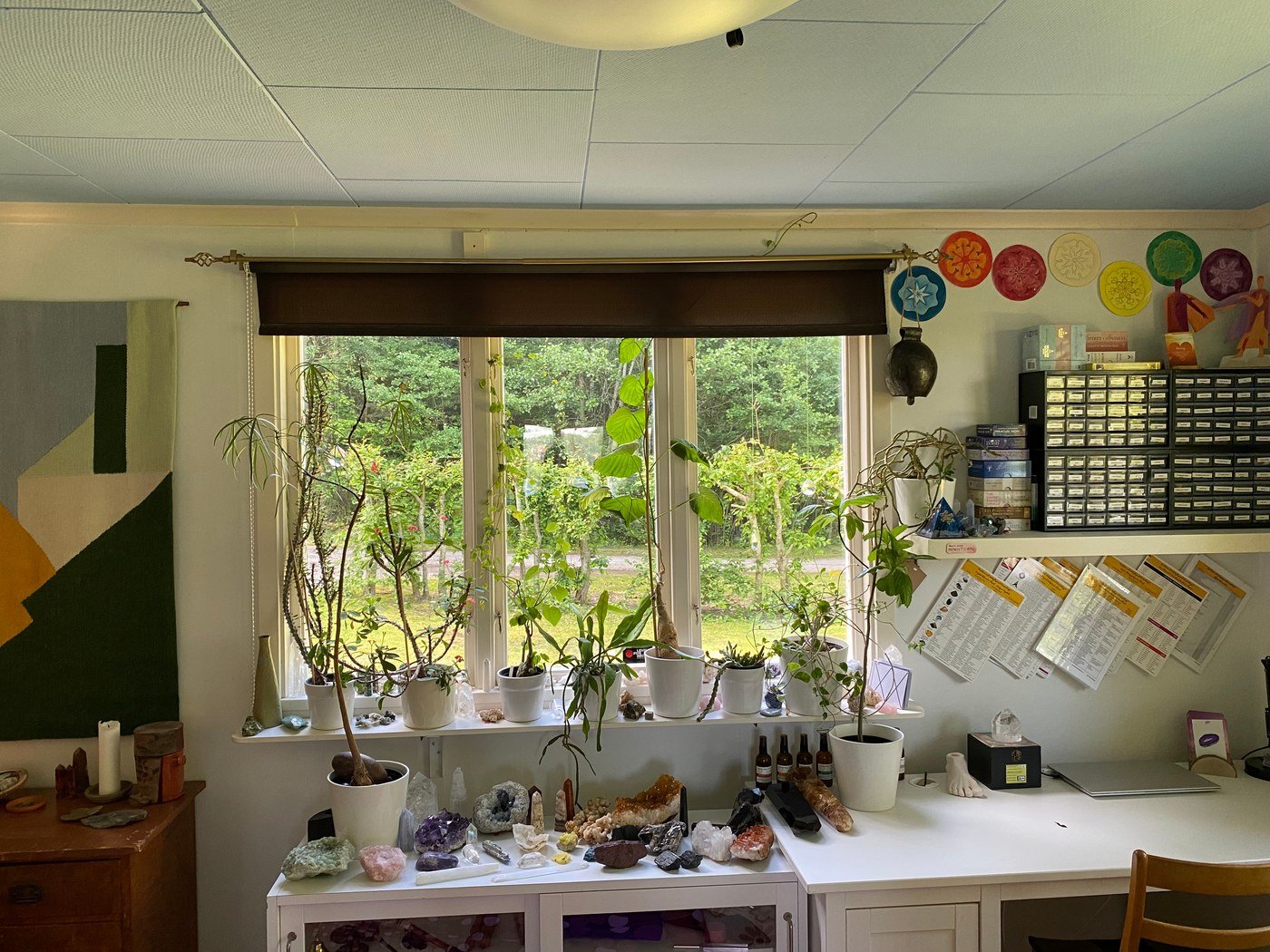
I teach my core courses in person at Heart of Mervin on Orust, with a maximum of six students in each group. There is time for personal guidance, questions and supported practice. You can ask for another demonstration, repeat a technique and let your confidence grow through experience.
Kineasy is a welcoming place to begin, with no previous training required. You can take it on its own for personal learning or continue towards practitioner certification. We can look at the course sequence together and find a pace that fits your circumstances.
Looking ahead
The benefits of learning Emotions & Metaphysical Kinesiology
A recognised practitioner pathway
The full qualification brings together all six core courses and the separate final Practitioner Certification Training Program, delivered online by Denise Robinson through By The Bay Kinesiology®. Together they total 278 proficiency hours. Successful graduates can apply for IICT membership and suitable insurance, subject to the requirements for their country and practice.
One course at a time
You can book individual courses as your plans develop. The dates and fees page sets out my Swedish course fees, and the final certification programme is booked and paid for separately. Speak with me before booking if you would like to discuss payment arrangements.
A community to learn with
Every Emotions & Metaphysical Kinesiology student joins an international Facebook group, and my students also join a private Swedish group. You can ask questions, receive information and find others to study or practise with. After qualification, Emotions & Metaphysical Kinesiology Connect and practitioner groups offer ways to stay connected as your work develops. Further professional development opportunities include a variety of specialised Emotions & Metaphysical Kinesiology Masterclasses, offering continued learning and opportunities to deepen your knowledge and practical skills.
Resources to return to
Your official manuals give you a reference to return to as you practise. You also receive a personal student portal login for course tests, study information, session sheets and films. If you need help finding something, you are welcome to ask me.
Practical learning for adults
We practise complete balance protocols in class, and I arrange additional practice opportunities at my clinic on Orust. For your course case studies, you can work with family, friends or willing volunteers. Practical and written assessments help you bring the learning together as you work towards proficiency.
Space to plan your own pace
You can study across one year’s available schedule or spread your learning over a longer period, within Emotions & Metaphysical Kinesiology’s five-year completion limit. Allow time for practice, case studies and the final certification programme. We can look at the dates together and plan from your chosen starting point.
If this way of learning speaks to you, I would love to welcome you. Explore the pathway or get in touch, and we can find a place to begin.
Emotions & Metaphysical Kinesiology™ was created by Denise Robinson of By The Bay Kinesiology®. Explore the official Emotions & Metaphysical Kinesiology approach and course curriculum.

