Study Kinesiology · Heart of Mervin
Emotions & Metaphysical Kinesiology Training FAQs
A little clarity before your next step.
Whether you are learning for yourself and your family, bringing Emotions & Metaphysical Kinesiology into an existing practice or preparing for a professional career, you are welcome here. These answers will help you understand the courses, plan your studies and feel more at home with what lies ahead.
My core courses take place in person on Orust, in groups of no more than six. We learn through demonstration, conversation and guided practice, with time to ask and try again.
Looking for information about an individual appointment? Visit the Kinesiology Session FAQs.
01
Before you begin Emotions & Metaphysical Kinesiology training
A little curiosity is enough to take the first step.
How does Emotions & Metaphysical Kinesiology differ from other approaches to Kinesiology?
Different Kinesiology approaches have their own focus and training pathway. Emotions & Metaphysical Kinesiology brings muscle reflex testing together with emotional exploration, traditional energy frameworks and remedies. Its receptive, yin approach gives particular attention to listening and the meaning each person finds in their experience.
For me, this means learning a clear structure while staying attentive to the person in front of us. You can read more on Why study Emotions & Metaphysical Kinesiology.
Can I learn for myself and my family, or do I need to become a practitioner?
You are welcome to learn for yourself and your family, to bring Emotions & Metaphysical Kinesiology into another therapeutic practice, or to work towards a professional career as a specialist kinesiologist. You can take Kineasy on its own, without committing to the full pathway, and decide afterwards whether you would like to continue.
If your aim is to work as a Certified Emotions & Metaphysical Kinesiology Practitioner, you will need to complete the full pathway and its assessments. You do not need to have that decision made before you begin.
Can I begin without a background in natural therapies?
Yes. Kineasy is designed for beginners and has no entry prerequisites. We start with the foundations, using explanations, demonstrations and practical exercises. Bring your curiosity and a willingness to try something new; I will guide you through the techniques and terminology as we go.
Is there a minimum age for Emotions & Metaphysical Kinesiology study?
The minimum age for Emotions & Metaphysical Kinesiology classroom courses and practitioner certification is 16. The learning includes personal reflection and responsible practice with others. If you are considering joining as a younger student, please speak with me so we can discuss the course and any arrangements you may need.
Do I need to feel spiritual or naturally intuitive already?
No particular spiritual background or confidence in your intuition is needed. We explore Emotions & Metaphysical Kinesiology’s spiritual and metaphysical perspectives respectfully, alongside its practical techniques. You can ask questions, notice your own responses and take time to find your understanding. Everyone brings a different experience to the group.
What if muscle testing feels unfamiliar or difficult?
It is quite natural for a new technique to feel unfamiliar. In Kineasy, I demonstrate the setup and help you practise with another person, as well as explore self-testing. We can look at your positioning, revisit a step and try again. Familiarity grows through practice, and you are welcome to ask for help along the way.
02
Your study pathway
Your course sequence, practice and support along the way.
Which courses come first, and how do the later courses connect?
Begin with Kineasy Intro. From there, Five Elements prepares you for Meridian Rivers of Chi. Chakra Healing prepares you for Transpersonal Chakra and Aura Balancing. These prerequisites help each course build on what you already know.
The Emotions & Metaphysical Kinesiology Study Pathway and the diagram on the dates and fees page show the sequence. We can look at the dates together and leave room for practice between courses.
Do I need all six courses before starting Denise’s practitioner program?
No. Before starting Denise Robinson’s Practitioner Certification Training Program, attend one course from each of the three prerequisite levels:
- Step 1 — Beginner: Kineasy Intro Course.
- Step 2 — Intermediate: Mastery of the Five Elements OR Chakra Healing Kinesiology.
- Step 3 — Advanced: Meridian Rivers of Chi Kinesiology OR Transpersonal Chakra Kinesiology OR Aura Balancing Kinesiology.
You do not need to have attended all six core courses before starting the practitioner program. To receive your final Emotions & Metaphysical Kinesiology Practitioner qualification, you must successfully complete all six core courses (198 hours) and the practitioner program (80 hours), totalling 278 hours, including all required assessments.
Individual course case studies and homework assessments do not have to be finished before enrolling in or attending Denise’s practitioner program. They must be completed successfully before you receive your final practitioner qualification.
See the practitioner program and Denise’s current pathway requirements for details.
What do I need to complete to become a Certified Emotions & Metaphysical Kinesiology Practitioner?
The full qualification includes all six core courses and the final Practitioner Certification Training Program, together accounting for 278 proficiency hours.
- Kineasy Intro Course.
- Mastery of the Five Elements Core Essence and Character.
- Meridian Rivers of Chi Kinesiology.
- Chakra Healing Kinesiology.
- Transpersonal Chakra Kinesiology.
- Aura Balancing Kinesiology.
I teach these six courses in person. They account for 198 proficiency hours, including independent learning. The separate six-week final programme contributes 80 hours and is delivered online by Emotions & Metaphysical Kinesiology founder Denise Robinson through By The Bay Kinesiology®. It is a required final step for professional certification, with separate enrolment and fees. See the certification programme for details.
Must I finish all my studies in one calendar year?
No. You can follow a single year’s schedule or spread your learning over a longer period, within Emotions & Metaphysical Kinesiology’s five-year completion limit from when you start. Your plan needs to allow for the available course dates, independent practice, case studies and the final certification programme. We can talk through a pace that fits your circumstances.
Is there a student community or study group I can join?
Yes. Every Emotions & Metaphysical Kinesiology student becomes part of an international Facebook group connecting students around the world. When you study with me, you also join a private Swedish Facebook group for my students.
You can ask questions, receive information, share experiences and find others to study or practise with. These groups help us stay connected between course days, so there is a place to turn when a question comes up.
Will I have support and opportunities to practise complete balances?
Yes. We practise complete balance protocols in the classroom, bringing the individual techniques together into a whole session. I also arrange extra opportunities to practise at my clinic on Orust and share the details with my students as they are organised.
For your balance case studies, you can work with family, friends or willing volunteers you have not met before—whichever suits you. Let each person know that this is student practice and make sure they agree to take part. Working with different people helps you become familiar with the session structure.
What do I need to complete for course proficiency?
Your learning includes practical work, case studies and written assessments, with oral discussion where required. Each core course includes six balance case studies and the written tasks specified for that module. These may include multiple-choice and short-answer questions; some courses also have additional tasks, such as the Five Elements constitutional profiles.
Written assessments are open book, and a 75% pass mark applies to the relevant written and practical competency requirements. You complete the independent work in your own time. A Certificate of Attendance records your classroom hours; a Certificate of Proficiency confirms that you have successfully completed the course requirements.
How do I access the tests for my course proficiency?
Every student receives a personal login to the student portal, where the course tests are completed online. You will also find information for your studies, session sheets and films to support your practice.
These resources are there for you to return to between course days. If you need help logging in or finding something, please ask me and I will help you get started.
Must every case study be finished before I enrol in the next course?
You can normally enrol in the next course while continuing your case studies, as long as you have attended its prerequisite courses. Emotions & Metaphysical Kinesiology does not require all case-study homework to be finished before enrolling in the next module, or before enrolling in or attending the final Practitioner Certification Training Program.
All required work must be completed successfully before full practitioner certification. I encourage you to work on it as you go, while each course is still fresh in your mind.
May I return and repeat a course?
Yes. Returning to a familiar course can help you notice more and strengthen your practice. Emotions & Metaphysical Kinesiology offers repeat attendance at 50% of the course fee for one of the six core courses you attended within the previous five years, with the same original instructor. Please check your eligibility, the current fee and available places with me before booking.
Bring your existing manual. Depending on the group, you may practise in a group of three or take part in a demonstration. I will explain the arrangements beforehand.
03
Learning in person
Feel prepared for your time in the classroom.
Where are the courses, and can I attend from further away?
My core courses take place in person at Heart of Mervin, Söbben 124, Henån, on Orust in Sweden. The current timetable is 9:30–17:30 each course day. See Emotions & Metaphysical Kinesiology Courses Dates & Fees for the dates of your chosen course.
You are welcome to travel from another part of Sweden or from abroad. Check all the course days before arranging travel and accommodation, especially when teaching is spread across more than one date block. If another location suits you better, the Emotions & Metaphysical Kinesiology instructor directory can help you explore your options.
How many students are in each course?
I keep my Emotions & Metaphysical Kinesiology courses to a maximum of six students. This allows me to offer personal guidance, make time for your questions and give everyone plenty of supported practice. You can ask for another demonstration or repeat a technique. I want you to feel comfortable learning, without feeling that you need to hurry.
What are the benefits of learning Emotions & Metaphysical Kinesiology together in person?
Being in the same room lets us learn through experience. You can watch a demonstration closely, try the technique and feel what it is like to receive a balance yourself.
- Learn with a partner. Practise both guiding and receiving a session, and learn from each other’s observations.
- Explore the materials. Handle the charts, remedies and tools as they are introduced.
- Notice the details. I can observe your technique and show an adjustment while you are practising.
- Share the learning. Conversation and reflection help us connect what is in the manual with what we experience.
For me, this combination of practical work and human connection is at the heart of learning in person.
What is included when I attend a course?
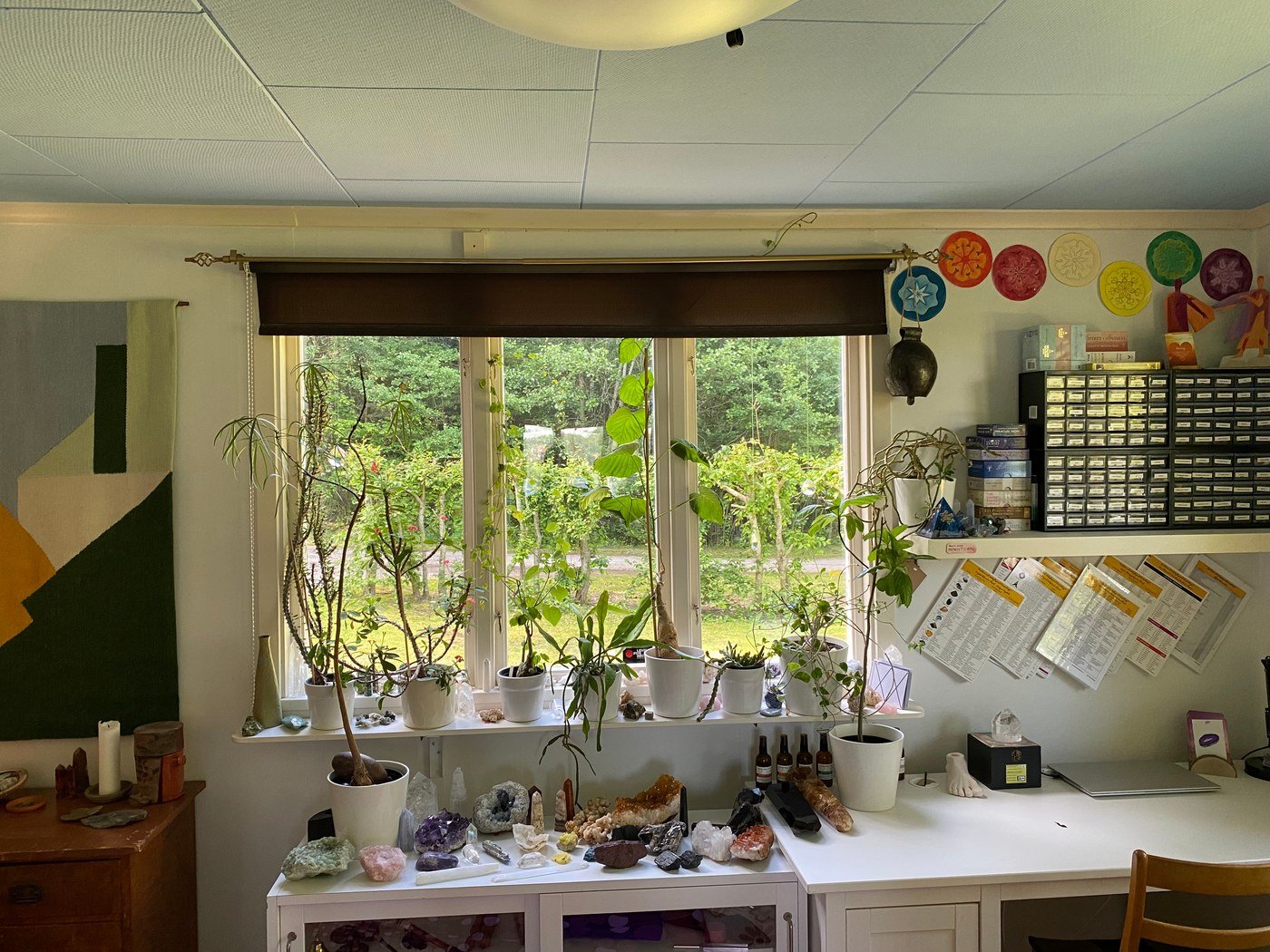
Your course fee includes the official manual and guided in-person training. The classroom is prepared with seating, treatment tables, session sheets and the resources we use for practice.
You receive an attendance certificate for the classroom training you complete, and a proficiency certificate once you have met the course requirements. Classroom remedies are available for learning; items you choose to take home for your own practice are purchased separately.
Can practical work be adapted if I cannot lie on a treatment table?
Please speak with me before booking so we can discuss your needs and the venue. Some testing and partner work can be done seated. We also need to respect the treatment tables’ manufacturer weight limits. Together, we can look at suitable arrangements, with attention to your comfort, consent and safe positioning.
What is best to wear?
Wear comfortable clothes that let you move freely and get on and off a treatment table. Layers can help you adjust to the room temperature, and warm socks are useful when working without shoes. Choose what helps you feel at ease throughout the day.
What should I bring on the day?
- A refillable water bottle and a reusable hot-drink cup with a lid.
- Lunch and snacks that suit you, with any cutlery you need.
- Pens, a highlighter and something for your notes.
- A small pillow or bolster if it helps you sit or lie comfortably.
- Your manual when returning for further course days or repeating a course.
Let me know about any practical or access needs beforehand, so we can prepare.
04
Tools & remedies
Get to know the materials at your own pace.
Do I need a complete collection of remedies before I start?
No. You can become familiar with the classroom materials before deciding what you want for your own practice. Emotions & Metaphysical Kinesiology uses flower essences, essential oils, crystals, colour, sound, acupressure tools and symbolic objects. Natural materials such as leaves, stones, shells and feathers also form part of the learning.
Start with what you have and let your collection grow gradually. I am happy to help you understand which resources are useful for your next course before you make a purchase.
05
Enrolment & fees
Bring your study plans and practical arrangements together.
How do I book a place with you?
Look through the course dates and fees, then contact me with the course and dates you are interested in. We will check availability and prerequisites together, and I will confirm your booking and payment arrangements. If you are beginning, choose one of the Kineasy intakes.
How early should I enrol?
Get in touch when you find dates that work for you. With a small group, it helps to plan ahead, particularly if you are travelling. If you intend to complete the full pathway, include the separate final certification programme’s schedule and entry requirements in your plans.
What should I budget for the full practitioner pathway?
For 2027, my two-day core courses cost SEK 5,400 each, and the four-day Meridian course costs SEK 10,800. All six local courses, with Kineasy taken once, total SEK 37,800. The SEK 1,500 deposit for each course is part of its fee.
The final Practitioner Certification Training Program is booked and paid for separately with By The Bay Kinesiology®. Remember to allow for travel, accommodation, any remedies you choose to buy, and professional membership, insurance and first aid where applicable. You can find the Swedish fees and the final programme’s fee information through the dates and fees page.
Can I spread my course payments?
Please talk with me before booking if you would like to spread your payments. We can discuss what may be possible and confirm the agreed schedule and balance deadline in writing. Payment arrangements for the separate final certification programme are made directly with its provider.
Is there a discount for paying for the whole pathway at once?
The published individual course fees are the starting point for planning your budget. If you would like to pay for several courses together, please speak with me first so we can confirm the total and any agreed arrangements. A full-pathway discount is not automatically included.
May I take different courses with different Emotions & Metaphysical Kinesiology instructors?
Yes, as long as you meet each course’s prerequisites. This can help when another instructor’s dates or location fit your plans better. Tell them which courses you have attended and share the relevant records. Confirm the booking terms before paying, as deposits and course payments are not automatically transferable between instructors.
What happens if I need to cancel or a course cannot run?
If your plans change, please send your cancellation or refund request in writing. The Course cancellation policy on Emotions & Metaphysical Kinesiology Courses Dates & Fees explains notice periods, the non-refundable deposit and administration fee, refunds and transfers.
Courses normally need at least four participants to run. If I have to cancel, the published policy provides for a refund of registration fees or a transfer to a future date. Please ask me about anything you would like clarified before booking, particularly if travel is involved.
06
After certification
Starting your practice, staying connected and continuing to grow.
What are my next steps once I am fully certified?
Once you have your final certification, you can prepare to welcome clients into your own practice. This includes arranging appropriate professional insurance, clear client information and consent, and the business arrangements required where you work. Your qualification allows you to apply for IICT practitioner membership.
The By The Bay Kinesiology® Practitioner Agreement covers ethics, use of the modality and recertification. Check the first-aid requirements for your location too. If you would like support as you begin, mentoring can help you think through the practical questions that arise.
How do I arrange professional indemnity and public liability insurance?
Use the practitioner information you receive when you qualify and contact IICT about membership and insurance options. Emotions & Metaphysical Kinesiology is recognised within its training-provider framework under Specialised Kinesiology.
Membership and insurance are separate arrangements. Ask the membership body and insurer to confirm eligibility and cover for your country and the work you intend to offer. If you combine Emotions & Metaphysical Kinesiology with other therapies, make sure each is included.
How can I keep growing in my Kinesiology career after qualifying?
Your learning can continue well beyond qualification. Emotions & Metaphysical Kinesiology regularly offers masterclasses on different themes for practitioners who want to deepen their understanding and extend their skills. Denise Robinson’s series through By The Bay Kinesiology® explores further protocols, natural remedies, and emotional and metaphysical perspectives.
Choose themes that interest you and fit the direction of your practice, checking each class’s entry requirements. Mentoring and reflection on your session work can also help you bring new learning into everyday practice. I am happy to talk with you about where you would like to grow.
Is there a community for qualified Emotions & Metaphysical Kinesiology practitioners?
Yes. Emotions & Metaphysical Kinesiology Connect is a free quarterly online gathering for active Emotions & Metaphysical Kinesiology practitioners. It is a place to meet colleagues, share experiences, celebrate progress and talk through the challenges of practice. The focus is community and mutual support, rather than teaching or mentoring.
Certified practitioners also have groups on Facebook and Instagram. The private Emotions & Metaphysical Kinesiology Practitioner Facebook group provides the joining details and RSVP information for Emotions & Metaphysical Kinesiology Connect. Ask me about access to the groups and upcoming gatherings when you qualify. Emotions & Metaphysical Kinesiology Connect meetings are voluntary, attended live and not recorded.
I value the encouragement that comes from staying connected with others. Having people to share the journey with can make a real difference as your practice develops.
How do I maintain active status, and is CPD required?
Emotions & Metaphysical Kinesiology asks practitioners to complete recertification every two years to maintain active status. Its current system does not require submission of Emotions & Metaphysical Kinesiology continuing professional development hours, although your insurer or another professional body may have its own requirements.
Your two-hour recertification appointment includes one hour to demonstrate a complete Emotions & Metaphysical Kinesiology session and one hour of mentoring. Arrange it within the three months before your renewal date. The official assessor fee is currently AUD 300, with a separate By The Bay Kinesiology® administration fee of AUD 132 including Australian GST for the renewed electronic certificate and two-year directory listing. Confirm the current fees before booking.
I am an approved Emotions & Metaphysical Kinesiology assessor and welcome you to discuss your renewal with me. You can find details under recertification and mentoring and in the official recertification information.
Is there something else you would like to ask?
You do not need to have your whole journey planned. Send me your question, and we can look together at a suitable place to begin.
Emotions & Metaphysical Kinesiology™ was created by Denise Robinson of By The Bay Kinesiology®. These answers are adapted for studying with Heart of Mervin. For the wider modality, see the official Emotions & Metaphysical Kinesiology FAQs. Course and certification requirements can change; check the linked course information when booking.